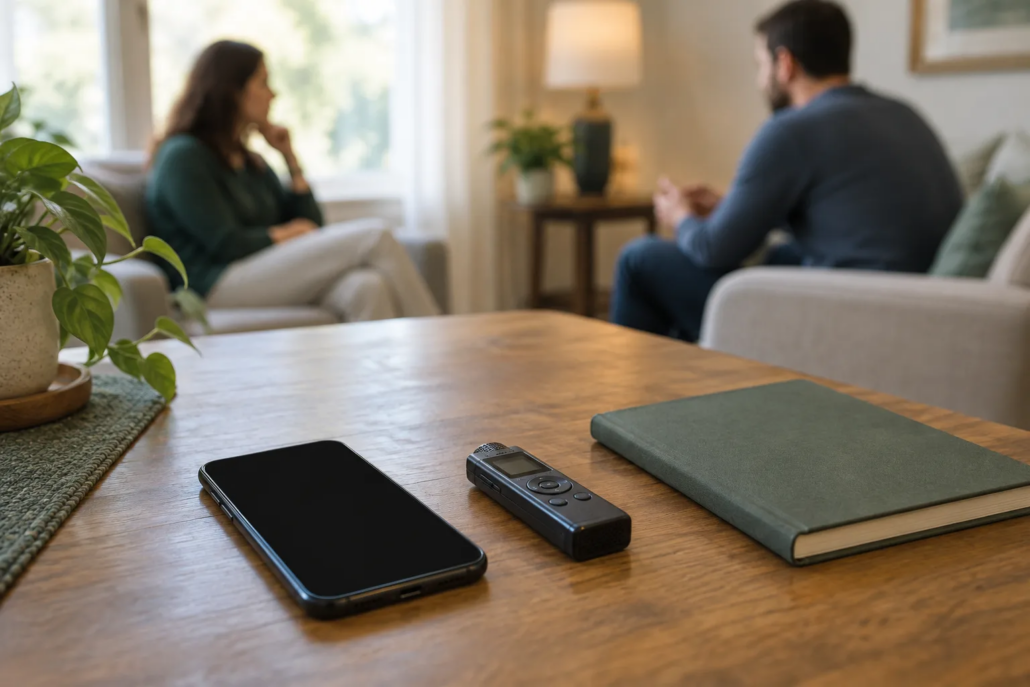
Are Texts or Recordings Evidence in a Brandon, MS Divorce?
A spouse finds a string of messages on a phone they already use, or has an audio recording from a tense conversation. It may seem obvious to save the material and send it to others. But texts and recordings as evidence in a Mississippi divorce raise two separate questions: is the material relevant, and was it obtained and shared lawfully? Confusing those issues can create privacy, credibility, or admissibility concerns.
For people navigating divorce in Brandon, Mississippi, the safest starting point is to distinguish preserving a communication already received from breaking into an account, device, or private conversation to get more. AS Law PLLC helps clients understand the legal issues that may affect family-law evidence. This article explains what may make digital material useful, how to preserve it without changing its context, and what to ask before sharing or relying on it. The answer depends on the facts, including how the material was obtained and what it is offered to show.
Texts and recordings as evidence in a Mississippi divorce
A message or recording is not automatically useful just because it seems personal or upsetting. In a Mississippi divorce, it generally needs to relate to an issue in the case, and the party offering it may need to show that it is genuine and complete enough to be understood. A screenshot with no surrounding conversation, for example, may leave out the date, the sender, or what came before and after. A recording may also be disputed if its source or context is unclear.
Relevance depends on the issue. Communications about parenting arrangements, finances, or a disputed event may provide context. A message about a suspected affair, for instance, is not necessarily proof of adultery by itself; the legal significance depends on the broader facts. For more context, see this Brandon guidance on adultery and divorce.
Courts also consider whether evidence meets applicable rules, including rules about authentication and hearsay. A judge may limit or exclude material for reasons that cannot be assessed from a screenshot alone. The fact that a message came from a spouse does not settle whether it is admissible or how much weight it deserves. In Brandon, the case-specific questions should be evaluated in the context of Mississippi law and the issues before the court.
Preserve the original and the surrounding context
If a person already has lawful access to a relevant communication, preserving the original file or conversation and keeping its date and surrounding context may help avoid disputes about edits or omissions. Avoid changing the content, and keep a note of how and when it came into your possession. These are general preservation considerations, not a guarantee that a court will admit the material.
Lawful access, privacy, and recording a spouse in Mississippi
The way evidence is obtained matters independently of what it appears to show. Saving a message sent directly to you is different from using another person’s password, bypassing a device lock, installing monitoring software, or entering an account without authorization. Familiarity with a device, a shared household, or knowledge of a password does not necessarily mean there is permission to access every account or conversation.
Recording rules can depend on the type of communication, the circumstances, consent, and a person’s reasonable expectation of privacy. Federal and Mississippi law may both be relevant, and the details can matter. Do not assume that being married, being present during a conversation, or believing a recording will help in a divorce makes every recording lawful. Video or audio captured in a private space can raise additional concerns. The legal analysis can differ for a phone call, an in-person conversation, and a recording made through a device left behind.
For a Brandon divorce that proceeds in Rankin County, family matters are generally handled in Rankin County Chancery Court, but venue and procedure depend on the case. The court’s location does not make every privately obtained recording admissible. Before distributing sensitive content or relying on a recording, a person can ask counsel to review how it was made, who participated, where it occurred, and whether it bears on a disputed issue. Avoid posting it publicly or circulating it broadly while those questions remain unresolved.
Keep financial communications within their proper boundaries
A message that refers to money or property may point to a subject worth examining, but it does not by itself establish that assets were concealed. If communications raise that concern, preserving records already lawfully available may be relevant; accessing a spouse’s private accounts is a different matter. This guide to preserving records when a spouse may be hiding assets discusses the related issue.
Practical steps before sharing or relying on digital evidence
Careful preservation can make it easier to explain where a communication came from and what it shows, while limiting unnecessary disclosure. General steps to consider discussing with a Mississippi family-law attorney include:
- Keep the original message, file, or device when possible, rather than relying only on a cropped or edited image.
- Preserve relevant surrounding messages and dates so the material is not presented without context.
- Record, for your own reference, how the material was received or created and who had access to it.
- Store copies securely and avoid sending sensitive content to people who do not need it.
- Do not try to obtain more material by guessing passwords, bypassing security, or secretly monitoring another person.
- Before using a recording, explain how it was made and what conversation or setting it captures.
A clear record of parenting communications may also help show what happened around an exchange, without turning ordinary documentation into invasive surveillance. For a related example, read this Mississippi guidance on documenting missed visitation.
Before disclosure, consider whether the full conversation is needed, whether it includes private information about children or other people, and whether a protective or other court process may be relevant. Do not assume that material suitable to share privately is appropriate to post online or attach to a public filing. A lawyer can assess the material’s possible relevance, privacy concerns, and the process for presenting it under the circumstances. These questions are especially important when the communication was captured without the other person’s knowledge or came from a shared device or account.
Frequently Asked Questions
Can I use a text my spouse sent directly to me in a Mississippi divorce?
A message sent directly to you may be easier to explain than material obtained from someone else’s account, but that does not make it automatically admissible. The court may consider relevance, authenticity, context, and other evidence rules. Keeping the original conversation and its surrounding messages may help clarify what the exchange shows. Whether it should be offered in a particular case depends on the circumstances and applicable Mississippi law.
Is it legal to record my spouse without telling them in Mississippi?
There is no safe answer based only on the fact that the person is your spouse. Recording laws can depend on the communication, participants, location, consent, and privacy expectations, and federal law may also matter. A recording made in a private space can raise different concerns from one made during a conversation in another setting. Ask a Mississippi attorney to assess how a specific recording was created before sharing or relying on it.
Can screenshots prove that a message is genuine?
Screenshots can be part of an explanation, but they may not resolve questions about who sent a message, whether it was edited, or what was omitted. Other information, such as the original device, a complete conversation, or testimony about how the message was received, may be relevant to authentication. The specific evidence rules and case circumstances matter, so a screenshot alone should not be treated as conclusive proof.
Should I send private messages to friends or post them online before court?
Broad sharing can expose private details, remove context, or create additional disputes about how the material was obtained and used. Posting online may also make sensitive information harder to control. Before circulating a message or recording, consider asking a Mississippi family-law attorney whether it is relevant, how it should be preserved, and whether there is a more appropriate way to address it in the case.
How AS Law PLLC Can Help
AS Law PLLC is dedicated to helping people in Brandon and throughout Mississippi understand the family-law issues that may arise when private communications become part of a divorce. The firm can review questions about access, recording circumstances, preservation, relevance, and the risks of sharing sensitive material. A careful review cannot promise that a court will admit or rely on particular evidence, but it can help clarify the issues and available options. For guidance before sharing or relying on a message or recording, contact Brandon divorce lawyers at AS Law PLLC to request a free consultation or case evaluation.
The information in this article is for educational purposes only and does not constitute legal advice. Laws can vary and change; contact a qualified attorney licensed in Mississippi for advice specific to your situation.


Leave a Reply
Want to join the discussion?Feel free to contribute!